
Keeping children safe around dogs
Written by Claire Burgess, Family Consultant and Laura Reitsis, Safeguarding around dogs

Baby with two Labradors
Keeping Children Safe Around Dogs
If you’re a parent of young children who spends time outdoors, chances are you’ve had at least one moment where a dog interaction made your heart jump. Perhaps a dog ran over during a ball game, wandered up to your picnic, or appeared just as your child was scooting past. Often it’s accompanied by a well-meaning “Don’t worry, they’re friendly!” — but that doesn’t always make the situation feel comfortable.
Most of the dogs we meet in parks and public spaces are well-loved family pets, but outdoor environments can be unpredictable. Movement, food, noise and unfamiliar children can all affect how a dog responds, and young children don’t yet have the ability to recognise when a dog may be feeling unsure or overwhelmed.
Keeping children safe around dogs outdoors isn’t about avoiding dogs or teaching children to be afraid of them. Instead, it’s about helping adults and children understand how to interact safely and respectfully so that everyone can enjoy shared spaces.
One of the most important things to remember is that young children cannot be expected to judge risk around dogs. They move quickly, make sudden noises and often want to approach animals enthusiastically. That’s where adults need to step in to guide the interaction.
Simple rules to teach children about dogs
When children understand some basic rules, it can help them feel more confident and help prevent situations from becoming overwhelming for the dog.
You might teach your child to remember these simple guidelines:
Always ask before approaching a dog.
If a dog has an owner with them, encourage your child to ask first: “Can I stroke your dog?” Not every dog wants to be touched, even if they seem friendly.
Let the dog come to you.
Running towards a dog or reaching over their head can feel threatening. Encourage children to stay calm and let the dog approach if it wants to.
Use gentle hands.
Show children how to stroke a dog gently on its side or chest rather than patting its head or grabbing its fur.
Never approach a dog that is eating, sleeping or chewing a toy.
Dogs can be protective of food and favourite objects, and they may react if disturbed.
Give dogs space.
If a dog is on a lead, behind a fence, tied up outside a shop or sitting with its owner, it’s usually best to admire it from a distance.
What adults can do in busy outdoor spaces
Parks, beaches and playgrounds are shared spaces where dogs and children often come together. As adults, we can often prevent problems simply by paying attention to what is happening around us.
If a dog approaches while your child is playing, it’s helpful to step in early. You might calmly move between the dog and your child, guide your child closer to you, or pause the activity until the dog has moved on.
For example, if your child is playing with a ball or a stick, riding a scooter or eating a snack, these can all attract a curious dog. Being ready to gently stop the activity and create a bit of space can prevent the situation from escalating.
The key is early, calm intervention rather than expecting children to manage the situation themselves.
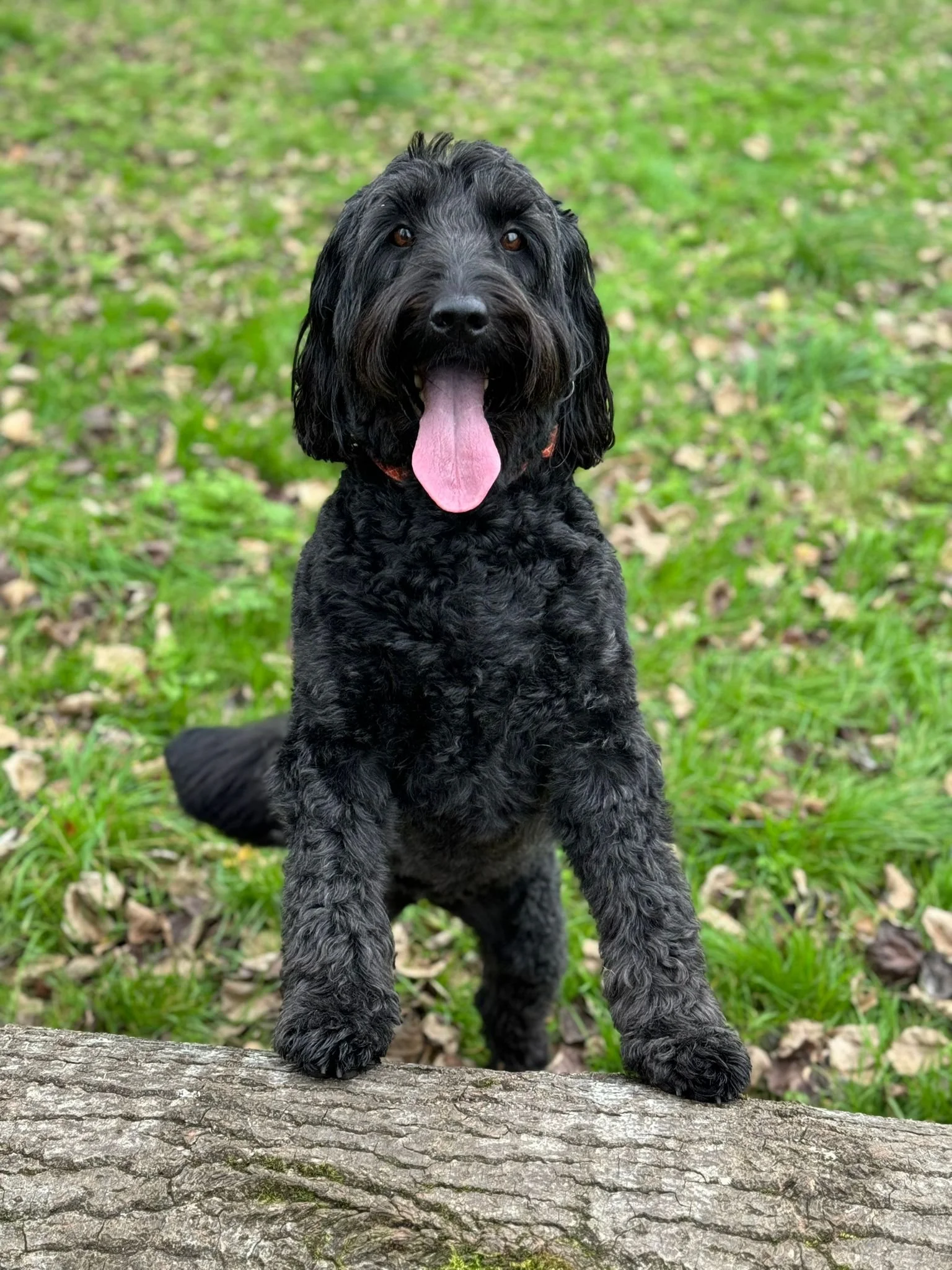
Black dog
Teaching children what to do if a dog comes too close
It can also help to give children a simple strategy if a dog approaches them unexpectedly.
A helpful approach is sometimes called “be a tree”:
Stand still
Keep hands by your sides
Stay quiet and calm
Avoid staring at the dog
Most dogs will quickly lose interest and move away.
This can be a useful strategy for children to practise so they feel confident if it ever happens.
Remember: most dog interactions are positive
Dogs can bring huge joy to children’s lives. Many children grow up with beloved family pets or develop wonderful relationships with dogs belonging to friends and relatives. By helping children learn how to interact with dogs safely and respectfully, we can make those experiences positive for everyone involved.
Laura has created an online safeguarding resource for parents and carers that explores these situations in more depth, with a focus on children and dogs in public outdoor spaces such as parks, beaches and walking routes. The aim is to support calm, confident decision-making — so outdoor time can remain enjoyable for children, dogs and the adults responsible for keeping them safe.
You can find Laura’s online course here.
While you are here we have lots more blogs on various topics which you can find here, as well as our downloadable webinars on topics such as behaviour and emotions, sleep and toilet training.
Don’t forget that we offer parent consultations should you need support with anything from sleep to behaviour and so much more! Details of the packages we offer can be found here.
We also have a Podcast ‘Newborn to Teen and Everything in Between’, you can listen here.