
Written Claire Burgess, Family Consultant
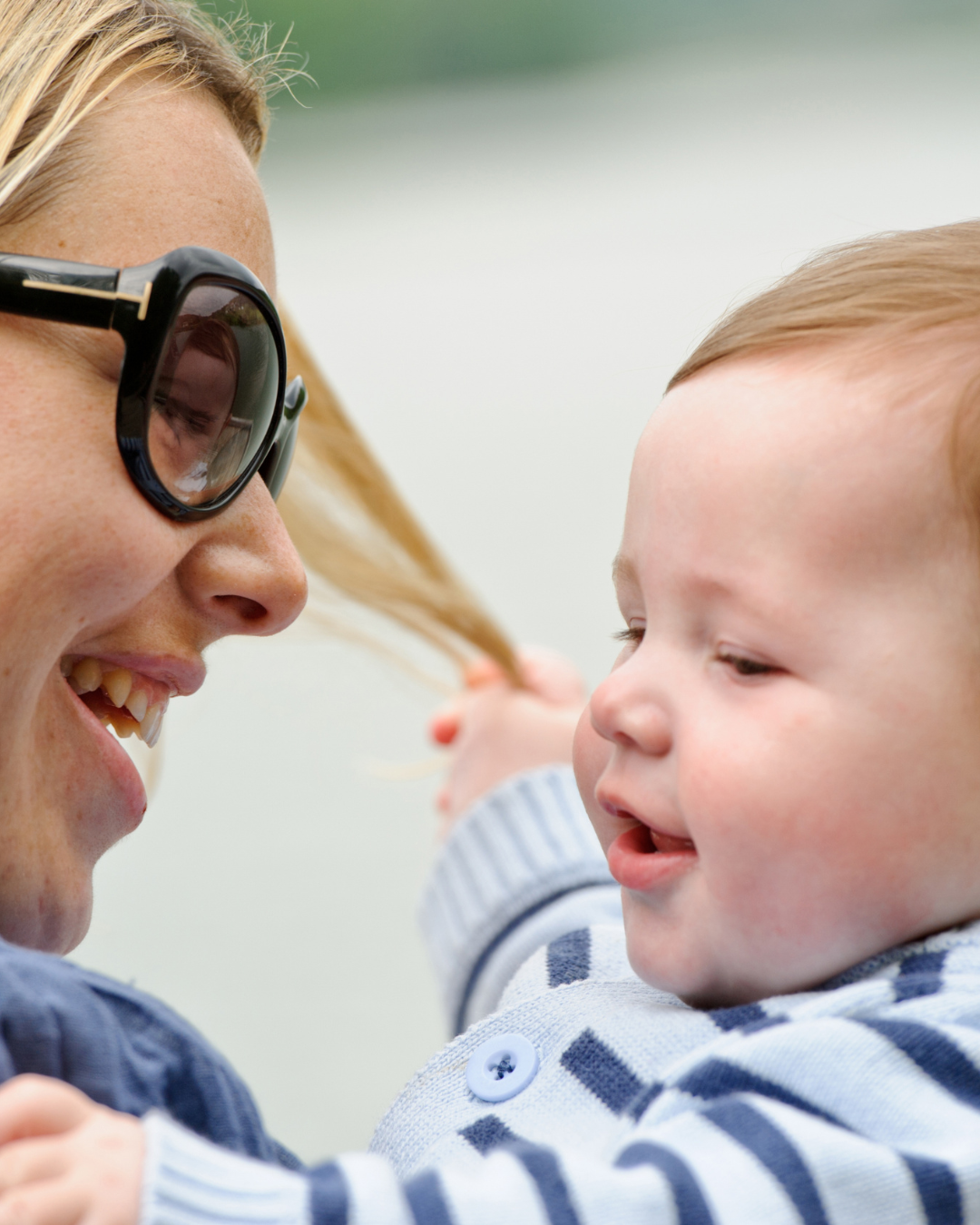
If your baby or young toddler has started scratching or pulling other people’s hair, you are probably feeling a mixture of shock, embarrassment and genuine worry about what it means. Before anything else, we want to reassure you; this is incredibly common in children under two, and it does not mean your child is aggressive, unkind or developing a behavioural problem. It means they are a baby, doing exactly what babies do when the world feels too big and their words haven’t caught up yet.
This blog focuses on babies and toddlers scratching and pulling other people’s hair. If your little one is biting too, our blog on why children bite covers that in more detail. If your child is pulling out their own hair, that is something different, and it is worth speaking to your GP.
Why do babies and young toddlers scratch and pull hair?
The most important thing to understand is that children under two have very limited ways of communicating. They cannot yet tell you they are frustrated, overwhelmed, excited, tired or overstimulated. That feeling has to come out somewhere, and often it comes out physically.
Unlike hitting in older children, scratching and hair pulling in babies and young toddlers is rarely about intent. Your child is not trying to hurt anyone. Here are some of the most common reasons it happens:
They are overwhelmed by their emotions
Big feelings like excitement, frustration, anger, even joy, can all trigger physical outbursts in very young children. When the emotional brain takes over, the body reacts before the child has any chance to stop it.
They cannot yet communicate what they need
Before language develops, babies and toddlers have almost no way to express what they want or how they feel. Physical behaviour is often the only outlet they have. Scratching and hair pulling often show up in exactly this window, before language starts to take off.
They are exploring cause and effect
Very young children are like scientists. They do something and watch what happens. If pulling hair produces a loud gasp and a strong reaction, that is genuinely interesting to them.
They are overstimulated
Busy environments, lots of other children, noise and new experiences can quickly tip a young child into overwhelm. Scratching or hair pulling can be a release valve for that feeling.
They are exploring with their hands
Babies learn about the world through touch. Grabbing, squeezing and pulling are all part of how they explore, and hair is soft, within reach and gets an instant reaction. In younger babies especially, hair pulling is often simple curiosity rather than frustration.
They are showing affection
This surprises a lot of parents, but young children sometimes grab, squeeze or pull at the people they love most because the feeling of love or excitement is simply too big to contain. They do not yet know how to channel those feelings in a way that does not hurt.
Common situations where you might see this behaviour
During play with other children, especially when toys are involved
When they are tired, hungry or have had a long and busy day
When they are very excited
During physical closeness like cuddles or feeds, when hair is within easy reach
When they are frustrated and cannot get what they want or make themselves understood
At nursery or on playdates, where there is more stimulation and more opportunity for these situations to arise
What about when it happens at nursery?
It can be mortifying to hear that your child has scratched or pulled the hair of another child at nursery, and upsetting to be on the other side of it too. Try to remember that this is one of the most common behaviours nursery staff deal with in the under-twos, and a good key worker will already have strategies in place. Speak to the nursery team about when it tends to happen and what seems to trigger it. Understanding the pattern is usually the first step to reducing it.
What you can do to help
Stay calm. We know this is easier said than done, but a big reaction like gasping, shouting, looking distressed, can actually reinforce the behaviour because it produces an interesting and immediate response. A calm, firm “no, that hurts” is more effective than a dramatic reaction.
Name the feeling behind it. Even very young children benefit from hearing their emotions named out loud. “I can see you are really frustrated right now. You cannot pull hair, but I understand you are cross.” They may not fully understand the words yet, but this builds the foundation for emotional vocabulary over time.
Step in before it happens if you can. Once you start to recognise the triggers, the tired signs, the overstimulation, the moment before frustration tips over, you can start to gently step in before the behaviour occurs. Removing your child from the situation calmly, offering a change of scene or a cuddle, can help to interrupt the cycle.
Offer something they are allowed to grab. If your little one loves to pull and squeeze, give them something that is fine to grab, like a textured toy, a soft-haired doll or a crinkly book. Keeping their nails short and tying your own hair back can also help while you work through this phase.
Give attention to the other person first. If another child or adult has been scratched or had their hair pulled, focus your attention on comforting them before addressing your child. This removes the immediate reward of your full attention and is a natural, calm consequence.
Be consistent. Every adult around your child needs to respond in the same way, calmly and consistently, every time. Mixed messages make it much harder for your child to learn what is expected.
Do not pull or scratch back. You may hear this suggested as a way of showing a child how it feels. It does not work, and it teaches the opposite of what you are trying to model.
Notice and praise the good moments. When your child shows gentleness, a soft stroke, a gentle touch, a moment of patience, make a point of naming and praising it. “You were so gentle there, that was lovely.” Over time this is one of the most powerful tools you have.
Will it stop?
Yes. In the vast majority of children, this phase passes naturally as language develops and they gain more tools to express how they feel. The key is consistency, staying calm, and continuing to give them the language and the outlet to express big feelings in other ways. If scratching or hair pulling carries on past the age of three, or seems linked to anxiety or self-soothing, it is worth talking it through with one of our consultants. The same goes if you are concerned that the behaviour is escalating, very frequent, or causing real distress.
If you are finding this phase really difficult to manage, our behaviour consultants are here to help. Book a free discovery call to talk it through.
