
Toilet Training: when and how to introduce the potty or toilet
Written by Claire Burgess, Family Consultant
Potty training is one of those milestones that everyone talks about and can feel quite daunting for parents/carers. It often comes with mixed emotions: excitement, worry, confusion, and a whole lot of patience!
When and how to start: readiness over age
The first thing to say is that there isn’t a one-size-fits-all age for toilet training. Instead, focus on your child’s developmental signs:
Showing interest in the potty or toilet (you can have a potty available from baby stage)
Staying dry for longer periods
Communicating bodily needs (with words or gestures)
Disliking dirty nappies
Able to sit independently which can be from around 6-9 months
These signs suggest your child may be ready to begin introducing potty skills. It is important to emphasise that you don’t need to wait for perfect readiness — starting with gentle exposure can help your child understand the process gradually.
First steps
Be prepared!
Having equipment available to you and your little one from a young age can help introduce the concept of using the potty or toilet to do a wee or poo. Sitting on the potty after naps or before bathtime, right from when they are able to sit up independently, helps the process to be one of potty learning rather than potty training.
Other things to have to hand are:
- pants
- clothes which are easy to pull up/pull down
- a portable potty.
All of these things will help with confidence for both you and your little one.
Make sure that are no signs of constipation as this can cause real issues with potty training success. Check out our blog on constipation for more information.
Ensure that your little one is drinking (water-based fluids or milk) regularly throughout the day so that the bladder is getting plenty of practice to fill, hold and release. Your little one needs to experience the feeling of a full bladder so that they start to learn when they need to go for a wee. The bladder is a muscle that needs to be worked and this can only be done with regular fluids.
Make the potty/toilet a normal part of life
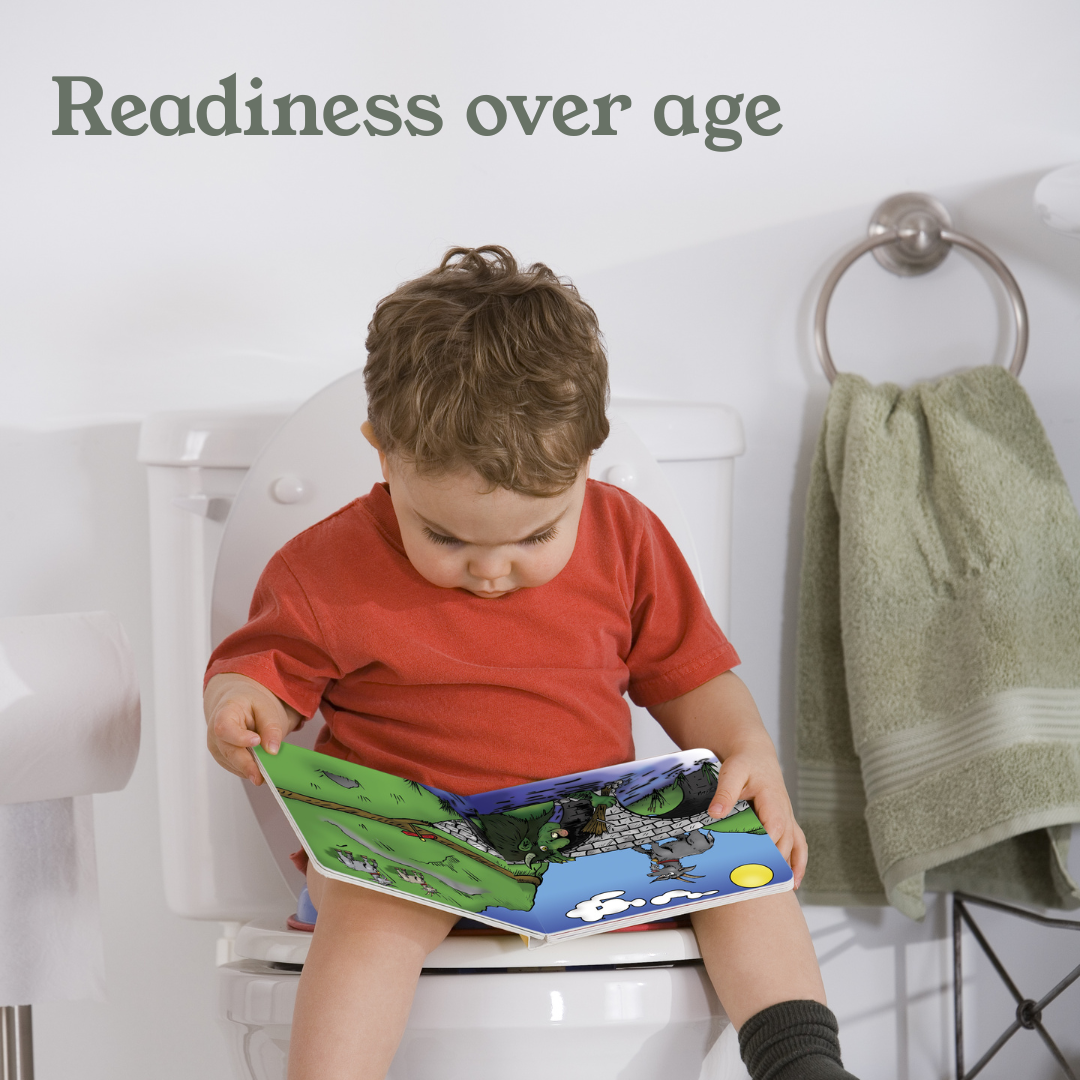
Introduce the potty or child-friendly toilet seat as part of daily life — let your child sit fully clothed on it, read a book there, or help make toilet-time fun. This builds familiarity rather than pressure.
Take your little one with you when you use the toilet. You are their role model, so seeing you going to the toilet, flushing the toilet, washing hands etc all helps them to understand that there is nothing to be worried about.
Nappy changes taking place in the bathroom will help make the link between doing a wee or poo and being in the bathroom. When your little one does a poo you can tip this from the nappy into the toilet, then get your little one to flush the toilet, wash their hands etc – all of this will encourage connections being made.
Putting time in the day where you encourage nappy off time. A good time for this can be for up to 30 mins after they have last done a wee or poo. This will help to build their confidence to go without a nappy and not have an accident.
When using disposable nappies or pull-ups, it can help to put a washable thin cloth in the nappy so that your little one will feel the moisture when they wee. Modern day nappies are so absorbent that our little ones never experience that feeling of weeing and being ‘wet’ as it is all absorbed so quickly.
When to ditch the nappies – if you have been doing all of the above; the potty/toilet is part of everyday life, your little one is having regular times on the potty, having nappy off time and you can see that they are ready to ‘ditch the nappies’ then go for it!
Watch for cues, not the clock
Rather than rigidly taking your child to the toilet every 20 minutes, watch for when your child usually needs the potty - like after meals or when they show signs of needing a wee or poo. If we go too regularly to the toilet we are not giving the bladder chance to signal to the brain that it is full and needs emptying, that feeling of ‘needing a wee’ (from having a full bladder) is a key concept that needs to be learnt.
Use a calm term like “toilet time” instead of asking “Do you need a wee/poo?” the question format can sometimes elicit an automatic “no” responses from little ones and can then leave you in a bit of battle ground!
Trying to introduce potty or toilet time at times through the day such as when they get up on the morning, after mealtimes (typically 20-30 mins after), before bathtime etc.
Keep it positive
Talk about bodily functions naturally and matter-of-factly. Make poo a neutral or positive topic so your child feels comfortable rather than worried about the toilet experience.
It is important to avoid saying things like stinky, yucky etc as this can cause a negative association with doing a poo which we want to avoid. We want our little ones to know that doing a poo is all about our body being healthy and doing is a poo is natural and normal for all of us!
What to do when toilet training feels hard
Avoiding Power Struggles
Sometimes potty training becomes a battle of wills: your child digs in their heels, refuses the potty, or insists on wearing nappies. This often isn’t about toilet skills at all - it could be a child asserting control in an area where they feel independent.
Tips to ease the struggle:
Keep routines consistent, but not super strict
Avoid forcing your little one to sit for long periods
Reduce pressure and let your child feel some ownership of the process
Focus on gentle encouragement
Have a look at our blog When Potty Training is a Power Struggle for more on this
Regression is normal
Even after a period of confidence, many children have accidents or regress - especially during life changes like starting nursery, moving home, or learning new skills. This is normal and not a sign of failure.
In many cases, regression can be linked to completely normal developmental shifts - including constipation pressing on the bladder, distraction with new achievements, or simple timing issues.
Have a look at our blog Potty training regression – is it normal? for more on this
Practical Tips
Check Sitting Position
A supportive potty or toilet seat with feet on a firm, flat surface (like a step) helps children relax and coordinate muscles better, often making doing both a wee and a poo easier. The ideal sitting position is with the knees just above the hips in a squat like position.
Be consistent with caregivers
If your child is cared for by others (e.g., family, nursery), alignment on the approach makes learning smoother. Everyone needs to be on the same page to avoid your little one being confused which in turn makes the toilet learning process much trickier.
Accidents are part of learning
Accidents will happen, and staying calm helps your child feel safe and continue learning rather than associating toileting with stress. Talk about where wee and poo needs to go and, if your little one has an accident, look to do the change of clothes etc in the bathroom to help with that toilet learning process.
Night-time dryness
This may not happen at the same time as the daytime and that is very normal. Check out our blog on nighttime dryness here for more information.
When to seek extra support
The toilet learning process will take time, lots of patience and there will be bumps in the road. However, if toileting issues persist, such as complete refusal, extreme anxiety, or very frequent accidents, consider speaking with your GP, health visitor, or us for tailored support and reassurance.
Toilet training is a process of learning, confidence building and bodily awareness, not a race. With repeated exposure, a calm and supportive environment, and patience when things don’t go perfectly, most children will master this skill in their own time.
If you’d like personalised guidance from creating a plan to managing tricky moments, our parent consultations can provide tailored support and confidence-building strategies. Book a free Discovery call to find out more. Read our toilet training parent consultation case study here .
This blog has been written following updated guidance on potty training from ERIC and The Institute of Health Visiting in October 2025. The new guidance says that it is better for children’s bladder and bowel health to stop using nappies between 18 and 30 months. This is a change from the advice to wait until children show signs of being ready to start toilet training.
For more information about Toilet Training you might be interested in ‘Your guide to Toilet Training’ - a step-by-step video guide - click here to find out more!
Don’t forget that we offer parent consultations should you need support with anything from sleep to behaviour and so much more! Details of the packages we offer can be found here.
We also have a podcast -with lots of toilet training episodes - ‘Newborn to Teen and Everything in Between’ - listen here.